Tuesday, 10 December 2013 12:01

Heartbeat Services Home

Wednesday, 11 February 2026 12:58

Why the Policies You Want Aren't the Ones You Need

by Valerie Harkins, Executive Director of the Maternity Housing CoalitionHH Feb

There is a very human impulse that shows up again and again in maternity housing leadership:
“Can I see your policies and procedures?”
“Does anyone have a full set I can use?”
“We just need something to get us started.”

This desire is understandable. Housing ministry is weighty work. Leaders are carrying legal responsibility, pastoral responsibility, donor trust, staff wellbeing, and the lives of mothers and children—all at once. Wanting a pre-written roadmap is not laziness; it’s fatigue mixed with responsibility.

But here’s the quiet truth we rarely say out loud: what feels like a shortcut at the beginning often becomes a long detour for years to come.

Why Housing Is Different

In many ministries, templated policies can be a reasonable starting point. Pregnancy centers, for example, often share core operational similarities: appointment-based services, limited client duration, standardized service models.

Housing is different.

Housing is incarnational. I’ve been pondering this word lately. The housing ministry is embodied, relational, and constant. You are not serving a client for an hour—you are stewarding a home, a community, and a shared daily life. The mission is lived out at 2:00 a.m., at the dinner table, in conflict, in relapse, in reconciliation.

Because of that, policies and procedures are not neutral documents. They are theological, sociological, and practical statements about what you believe human dignity requires in your context.

A policy that makes sense for:

  • A home serving college students
  • A home serving women exiting street homelessness
  • A home serving women from a reservation community
  • A home serving women in addiction recovery

may share vocabulary—but they should not share substance.

If they do, something important has been skipped.

The Temptation to “Model After” Another Program

It’s tempting to build a program by modeling it after a respected home:

“They’re established.”
“They’re doing it well.”
“We’ll adjust later.”

But program design doesn’t begin with policies. It begins with discernment. When that step is bypassed, policies quietly become misaligned with mission—and the misalignment doesn’t stay contained. It seeps into staff culture, resident expectations, board confusion, and eventually, outcomes.

Policies written before clarity do not save time. They simply postpone the work until it is harder to undo.

What Policies Are Actually Meant to Do

Healthy policies are not aspirational documents. They are protective agreements that flow from three anchors:

  1. Your Mission
    Not a generic mission. Your mission—clearly articulated, bounded, and honest about what you are and are not called to do.

  2. Your Community Needs Assessment
    Who are you serving in reality, not on paper? What histories, risks, strengths, and patterns show up consistently in your home?

  3. Your Indicators of Success
    Three to five measurable outcomes that, if achieved, mean your mission is being fulfilled at a baseline level.

Only after those anchors are in place do policies make sense. And once policies are clear, procedures naturally follow. Procedures exist to serve policies—not the other way around.

On Measuring Outcomes (Yes, You Can)

Many leaders quietly resist outcome measurement—not because they don’t value excellence, but because goals feel ambiguous or overwhelming. That hesitation is usually a signal, not a failure.

It typically means one of two things:

  • The mission statement needs refinement, or
  • The organization needs support in learning how to measure what already matters.

There are very few—if any—outcomes in the housing ministry that cannot be measured in some meaningful way. Measurement is not about control; it’s about unity and integrity. It aligns boards and staff, honors constituents, strengthens donor trust, and—perhaps most importantly—guards against mission drift.

What you do not define, something else will define for you.

Learning From One Another—The Right Way

None of this means we stop learning from one another. On the contrary, learning is essential. But how we learn matters.

The strongest growth happens through:

  • conversation, not document dumps
  • context, not copy-paste
  • relationships, not repositories

Networking allows leaders to explain why a policy exists, who it serves, and where it struggles. It allows differences to be respected rather than erased. It strengthens the field without flattening it.

When policies are shared relationally—through story, dialogue, and discernment—everyone grows wiser without compromising their own mission.

A Gentle Invitation Forward

If you feel the pull toward ready-made policies, pause—not to shame yourself, but to listen. That pull often signals a deeper need: clarity, confidence, or companionship in leadership.

Mission leads.
Data clarifies.
Outcomes focus.
Policies protect.
Procedures serve.

That order matters—today and ten years from now.

The companion handout,  "Indicators of Success," will help you think through this process. And as always, you are not meant to do this work alone. The strength of this Coalition has never been uniformity—it has been faithfulness, thoughtfully lived out in very different homes, for very different women, with the same deep commitment to life and dignity.

Tuesday, 10 March 2026 14:30

Maternity Housing Coalition | Leadership & Practice Series

The Space Between: Finding the Right Attachment in Maternity Housing Work

by Valerie Harkins, Executive Director, Maternity Housing CoalitionLeadership Practice Series

 

There is a tension that lives inside every good maternity home worker. It’s quiet most of the time, but it surfaces in the small moments. When a resident makes a choice you saw coming, you have to decide whether to step in or step back. When a young woman is circling the same painful pattern for the third time, and something in you wants desperately to grab the wheel. When a program rule feels cold in the face of a warm human story sitting right in front of you.

That tension doesn’t mean something is wrong with you. In fact, it might mean something is very right. The question is not whether you feel it; the question is how you manage it. Because that tension, held well, is precisely what makes great maternity housing work possible. Held poorly, in either direction, it becomes one of the most subtle and destructive forces in our field.

Let’s talk honestly about the two failure modes and the narrow, necessary road that runs between them.

The Problem of Over-Attachment

There is a kind of care that looks like love but functions like control. It’s warm, it’s well-intentioned, and it is quietly devastating to the people it intends to help.

Over-attached workers are not bad people. More often than not, they are the most passionate people on your team. They are the ones who stayed late, who cried in the car on the way home, who prayed hardest for the women in their care. But somewhere along the way, that passion crossed a line, and instead of walking with the resident through her journey, the worker began carrying the resident for her.

The clinical term for one dimension of this is toxic empathy, and it is worth understanding precisely. Healthy empathy is the capacity to feel alongside someone, to be genuinely moved by their pain, and to use that understanding to serve them better. Toxic empathy is what happens when that feeling becomes so consuming that the worker’s emotional state becomes entangled with the resident’s outcomes. At that point, the worker is no longer responding to the resident’s actual needs. She is responding to her own discomfort, her own need to see the resident succeed, to see the situation resolved, to relieve the ache of watching someone struggle.

The result is predictable: workers who over-correct. Who softens every hard edge. Who negotiate around natural consequences. Who quietly rearrange the environment so the resident never quite has to face the full weight of her own decisions.

And here is what that actually communicates to the resident, even when no words are spoken: I don’t believe you can handle this. I don’t trust you to grow from it. I need to protect you from yourself.

That message, however lovingly delivered, is profoundly disrespectful.

Consider this from a theological perspective. Christ did not remove free will to protect us from ourselves. He could have. Omnipotence affords that option. But He didn’t, because a life insulated from the consequences of one’s own choices is not a human life in any dignified sense. Free will is not a design flaw to be managed. It is the very mechanism through which transformation occurs. The prodigal son’s father did not chase him to the far country. He did not wire him money when the famine came. He let that young man sit in the mud with the pigs until something broke open inside him, and then he ran toward him. The father’s restraint was not indifference. It was the most profound form of respect he could offer.

When we over-shelter a resident from the consequences of her own choices, we are not being more loving than the Father. We are being less wise. We are removing the very friction that produces growth. We are, with all good intentions, robbing her of the lesson she came here to learn.

There is also a burnout dimension to this that we cannot afford to ignore. Workers who carry the weight of residents’ outcomes as if those outcomes belong to them will not last in this work. Compassion fatigue and secondary traumatic stress are well-documented in residential care settings, and over-attachment is one of their primary drivers. The worker who believes it is her job to save every woman who walks through the door will eventually be undone by the ones she couldn’t. Or worse, she will begin unconsciously choosing residents she believes are “save-able” and disengaging from those who are not. Neither outcome serves the mission.

The Problem of Over-Detachment

The opposite error is less emotionally dramatic but no less damaging. It wears a professional face. It follows every protocol. It produces clean paperwork and respects program boundaries. And it is hollow at its core.

Over-detached workers have learned, through exhaustion, through disappointment, through self-preservation, to create emotional distance between themselves and the residents they serve. They do their job. They complete the required check-ins, facilitate the required groups, and issue the required warnings. But somewhere in that process, the person sitting across from them has been replaced by a case.

This is the migration from serving the mission to serving the program. And it is more common than most of us want to admit.

A program, meaning its policies, schedules, rules, and procedures, is a tool. It is the scaffolding you build to create consistency and safety in a complex environment. A well-designed program is genuinely valuable. But scaffolding is not the building. It is not the reason you built the building. When workers begin treating the program as the point and the resident as the means of executing the program, something has gone spiritually wrong in the organization.

Here is the drift as it typically unfolds. An organization is founded on a burning sense of purpose. Someone saw a need, felt called, and built something to address it. In the early days, the mission is alive in the walls. Every decision, every exception, every conversation is filtered through the question: What does this woman need? As the organization grows, structure becomes necessary. Policies are written. Staff are hired. Job descriptions are formalized. This is not wrong; it is wise stewardship. But without intentional, ongoing cultivation of organizational culture, the structure slowly becomes the thing itself. Staff are evaluated on compliance with the program. Meetings are about program performance metrics. New staff are trained on the rules before they are formed in vision. The organization, imperceptibly and without anyone intending it, has begun to exist for itself.

C.S. Lewis described this kind of institutional decay as the corruption of something good rather than the creation of something evil. No one decided to stop caring about the mission. The mission simply got buried under the weight of operations.

And when the mission is buried, the residents feel it. They receive services, but they don’t receive presence. They are processed through a system, not welcomed into a community. They follow the rules because the rules are enforced, not because they are growing. And the moment they leave the program, the growth stops, because the growth was never really theirs to begin with. It belonged to the program.

We must remember: the soul of every resident who arrives at your door was directed there by God, not by your marketing budget or your referral network. That soul has a story and a dignity that no intake form can capture. To serve the mission of your organization is, ultimately, to steward the sacred trust of that person. When your organization begins to exist primarily for the purpose of being an organization, for sustaining its own programs, protecting its own budget, and perpetuating its own existence, it has ceased to be a ministry and become a bureaucracy. And bureaucracies, however well-funded and well-staffed, cannot do what you were built to do.

Engaged Presence Without Enmeshment

So what does it look like to get this right?

The goal is what some in the therapeutic community call engaged detachment, a posture that is fully present, genuinely invested, and emotionally alive, while remaining clear-eyed enough to stay out of the way when staying out of the way is the most caring thing you can do. It is not a halfway measure between caring and not caring. It is a third thing entirely, a more mature and more disciplined form of love.

Think of it as the difference between a guide and a rescuer. A rescuer is reactive. She cannot tolerate watching someone struggle, and her emotional system is organized around eliminating the struggle. A guide is intentional. She has been down the road before. She knows which falls are instructive and which are dangerous. She walks alongside, she points ahead, she celebrates hard-won progress, and she knows when to let someone sit with a difficult mile rather than carrying them through it. The guide is no less invested than the rescuer. She may actually love the traveler more, because her love is disciplined enough to serve the traveler’s actual growth rather than her own need for resolution.

In practical terms, this posture has several characteristics worth naming.

It makes room for failure. Maternity homes should be safe places to fail. Safety lives in the relationship and the environment, not in the absence of consequences. When a resident makes a poor financial decision, she should feel it. When she misses an appointment, that consequence should land on her, not be quietly absorbed by a well-meaning staff member. Remove the friction, and you remove the classroom.

It distinguishes between empathy and compassion. Empathy feels with someone. Compassion acts on their behalf, even when acting on their behalf means stepping back. A worker high in compassion can sit with a resident's pain without needing to fix it. She can say, this is hard, and I believe you have what it takes to get through it, and mean both parts equally.

It keeps the mission verbal and visible. The mission cannot be a sentence on the wall. It has to be the living reference point for every decision, present in staff meetings, in supervision, in the stories you tell about residents who have grown. Ask yourself: in your last three staff meetings, how much time was spent on program logistics versus talking about the actual people in your care?

It builds a program that bends without breaking. A healthy program is not static. The model that served your residents five years ago may not fit the women arriving today. Leaders attached to the mission rather than the program welcome that evolution. They expect it. A thoughtful adjustment each year is far healthier than clinging to a design because change feels risky or because the original model has become someone's professional identity.

It sustains the worker. Workers who care deeply but don't carry what isn't theirs to carry remain in this work. They don't burn out in two years. They don't grow the cynical shell that self-protection produces. They bring freshness to each resident because they were not depleted by the one before her. Understanding this balance is not a luxury for your team. It is a retention strategy and a quality-of-care strategy in one.

A Word to Leaders

If you are an executive director or program director reading this, I want to say something directly to you.

The culture of attachment in your organization is set by you. Not by your policies, by your example. The way you talk about residents in staff meetings, the way you respond when a resident fails, the way you frame success and loss for your team, all of it communicates what appropriate investment looks like. If you process residents as cases, your team will too. If you speak of them as souls, your team will too.

And when your program needs to change, when the data or the discernment or the direct feedback from residents tells you that something isn't working, be willing to name it and move. The most dangerous thing you can say in a mission-driven organization is: "This is how we've always done it." Because always doing it the same way is a declaration that the program matters more than the people. And you know better than that. That's why you're in this work.

A Closing Thought

We are a field full of people who chose this work on purpose. Nobody stumbles into maternity housing by accident. You are here because something called you here, a conviction, a story, a faith, a fire. That calling is real. Honor it by protecting it.

The women who come to your doors are not yours to save. They are God's to redeem. You are a part of that process, a vital, meaningful, irreplaceable part. But you are not the whole of it. Your role is to be present enough to love them well, and grounded enough in the mission that your love serves their growth rather than your comfort.

That is the narrow road. It is not easy to walk. But it is the one that leads somewhere.

Wednesday, 10 June 2026 08:12

Is Synthetic Marijuana the New Opioid Epidemic?

by Valerie Harkins Lindsey, Executive Director, Maternity Housing Coalition

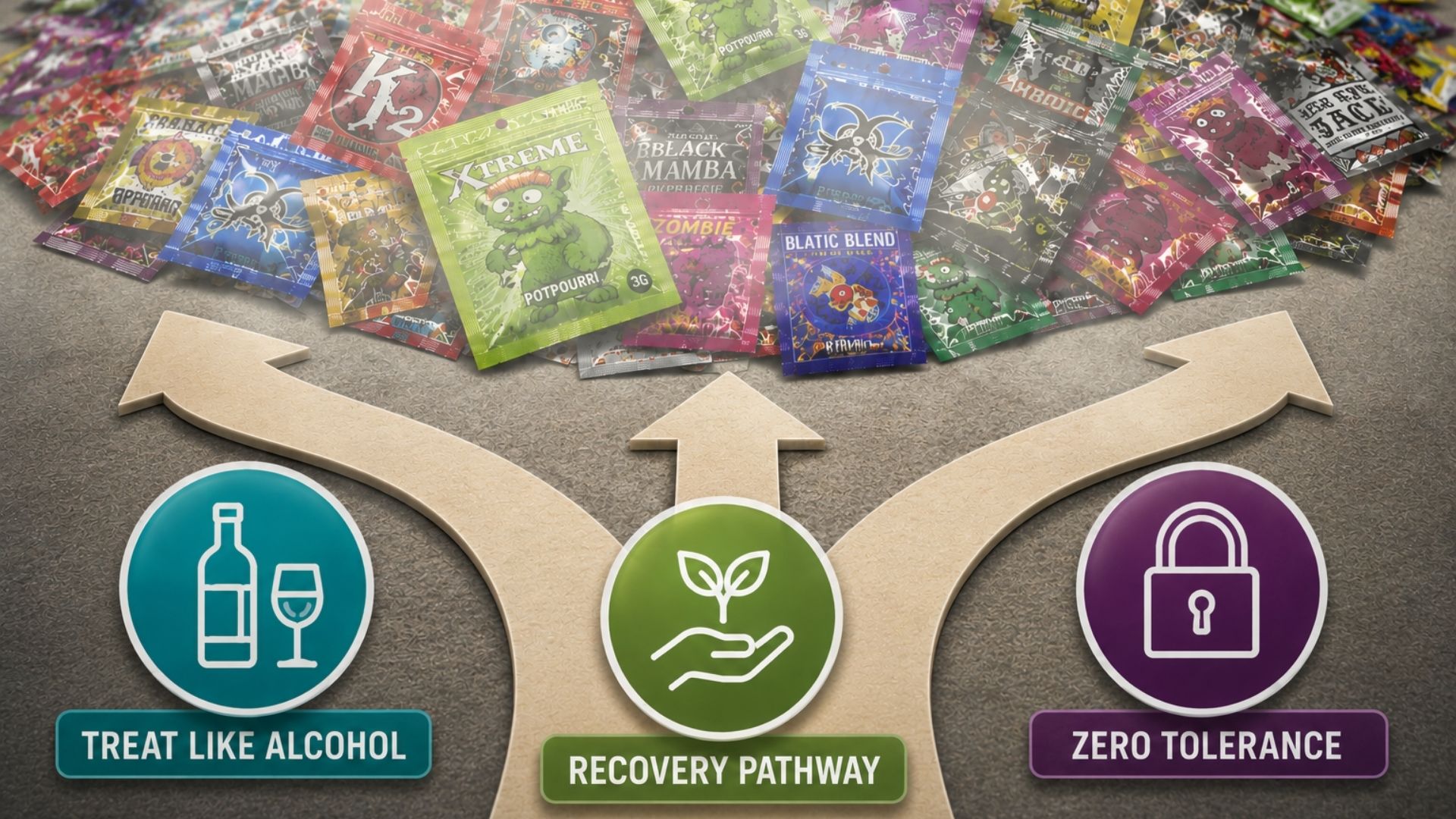
Every maternity home eventually runs into a problem that refuses to stay tidy and behave itself. Synthetic marijuana is one of those problems. It’s marijuana, one of the oldest drugs - but is it really?

It is tempting to treat it like ordinary marijuana, or fold it into an alcohol policy and call it a day. That would be convenient. It might also be insufficient.

HH June 2026Synthetic cannabinoids, often sold as K2 or Spice, are lab-made chemicals designed to act on the same brain receptors as THC. NIDA states that K2 and Spice can produce stronger effects than marijuana, and an NIH-hosted peer-reviewed article explains that many synthetic cannabinoids are more potent than THC because they activate cannabinoid receptors more fully and intensely. In plain English, this is not just marijuana with a different label. It is engineered to hit harder, and often does.

Why does that matter in maternity housing? Because the fallout is not just behavioral. It can be psychiatric. The CDC warns that synthetic cannabinoids can cause confusion, hallucinations, delusions, psychosis, suicidal thoughts, violent behavior, and problems with concentration. The CDC also notes that these products are unpredictable, with no consistent manufacturing standards, which means two similar-looking packages may contain very different chemicals or doses.

That is why many leaders are rethinking whether and how synthetic marijuana belongs under a standard substance policy at all.

Here are the basic policy approaches I see programs weighing:

  • Treat it like alcohol
    Residents over 21 may use off-campus, but may not return home under the influence. This is an acknowledgement of the resident’s legal age for consumption and the inability of residential staff to control resident behavior when away from the home. This is simple, familiar, and easy to explain. The weakness is that synthetic cannabinoids are far less predictable than alcohol, and the psychiatric risks can escalate quickly.
  • Ban alcohol and marijuana entirely
    Some programs take the clearest route possible. No alcohol. No marijuana. No synthetic marijuana. This is often easier to enforce and may fit best in homes where stability and safety are already fragile. However, a note of consideration here is that if using this approach, you may deem a large portion of applicants as ineligible for help through your ministry.
  • Give synthetic marijuana its own category
    This may be the most realistic option. It allows a program to keep its existing alcohol or marijuana policy while acknowledging that synthetic cannabinoids carry a different level of risk, especially where psychiatric health is concerned. Homes may accept a resident with pre-existing cannabinoid use but require recovery program participation including daily/weekly 12-step work, individual counseling, and outpatient recovery services. Randomized drug testing is recommended with this approach.

There is also the addiction issue, and it should not be minimized. NIDA says anyone can become addicted to synthetic drugs, and the CDC reports that synthetic cannabinoids can lead to physical and psychological dependence. People who stop after heavy use have reported severe anxiety, trouble sleeping, nausea, vomiting, sweating, rapid heart rate, chest pain, difficulty breathing, and even seizures. So if a resident has been using synthetic marijuana, consequences alone are rarely enough. Recovery work matters.

A practical response usually includes:

  • Clear staff language
    Define what staff should watch for, such as confusion, paranoia, hallucinations, suicidal talk, agitation, or severe vomiting.
  • A safety-first response
    If a resident appears medically or psychiatrically unstable, the first question is not what consequence to assign. The first question is whether she needs urgent medical evaluation.
  • A recovery path after the incident
    Consider assessment, counseling, treatment referral, relapse planning, and closer support. If addiction is part of the picture, presuming it is merely a discipline problem will not help the resident.

I would also encourage homes to think carefully before defaulting to exclusion whenever cannabinoid addiction enters the picture. Many programs assume they are not equipped to serve these residents, when in reality the core needs are often more practical than specialized. What many women need most is a house that notices what is happening, provides real structure, sets clear expectations, and connects them every day to people who are qualified to help, especially recovery programs and other clinical supports in the community. Not every home is called to every level of care, but many are more capable than they think if they approach the issue with awareness, consistency, and a willingness to build the right outside partnerships.

This is one of those moments when policy needs to be smarter than the street name. Synthetic marijuana may sound familiar, but its effects can be anything but. The goal is not to overreact. The goal is to see clearly, respond calmly, and write policy that deals with the real problem instead of the convenient one.

This article is for informational and training purposes only and is not medical advice.

Sources

SAMHSA National Helpline
https://www.samhsa.gov/find-help/helplines/national-helpline

Friday, 02 November 2012 13:50

Thank you for your subscription!

Thank you for your interest in learning more about what Heartbeat International is doing on a daily basis to inspire and equip Christian communities worldwide to rescue women and couples from abortion through the development of neighborhood pregnancy help centers, maternity homes, and adoption services

We respect your privacy. Your contact information will only be used by our staff for periodic email updates. If at any time you wish to be removed from any of the mailing lists you have subscribed to, simply click the unsubscribe link found in the emails you receive.

Thursday, 15 November 2012 09:46

Custom Course Questionnaire

Download the Custom Course Ordering Questionnaire

Download and complete the Custom Course Questionairre below with the assistance of any staff members who may be involved in the administration of your course, and return it to This email address is being protected from spambots. You need JavaScript enabled to view it.. We will begin processing your order upon receipt of this form and your payment. 


Thursday, 17 July 2014 00:00

Together, We've Reached an Amazing Milestone!


Together, We've Reached an Amazing Milestone!

Yesterday, at 12:08 am, a Heartbeat International Option Line consultant answered a call. The young woman on the other end of the line was looking for abortion information.

She needed someone, especially when she felt most alone. Option Line—Heartbeat’s 24/7 helpline—was there. And, the young woman was referred to help in her community, Heartbeat affiliate in Northeastern, Ohio.

But what was so special about this midnight call? After all, Option Line has been reaching women with life-affirming help and hope for nearly 100,000 consecutive hours—including holidays—and carefully connecting women in need with you.

This particular call was worthy to celebrate because it marked the 2 millionth time Option Line has answered since we first said, "Hello," in 2003.


Option Line is the realization of one of the five original goals of Heartbeat founders back in 1971. "I am so thankful the Lord has allowed Heartbeat's Option Line to be an amazing instrument bringing help and hope to so many," says Peggy Hartshorn, Ph.D., who has been at Heartbeat's helm for 22 years.

"Thousands of children and thankful parents today are alive and well because of the amazing collaboration between the pregnancy help network, pro-life advertisers and websites, churches, and Heartbeat International.

Without your faithful, life-affirming work in your community, Heartbeat’s Option Line would have no assurance that the women and families we reach get the in-person, long-term help we strive to connect them to every day.”

That's why we invite you to celebrate with us, because it is truly “our” celebration together!

One of those women helped by you and Option Line in the past is Morgan, whose story we want to share with you.


Morgan's Story

Morgan stood in the airport, watching the crowds of humanity bustle by.

Businessmen checking their phones for emails, travelers standing in line in the food court. Everybody seemed so occupied.

Nobody could know her inner turmoil.

Carrying a pregnancy she hadn't expected, her family deeply divided between life and death. She was only 18 years old.

As she boarded the plane for her mother's town, Morgan felt lost and insignificant. Forgotten in a crowd. 

Did anybody care? 

Find out how Morgan found life-affirming help in this month's Pulse.

Wednesday, 28 August 2013 23:31

Congratulations to Our ConCERT Graduates!


ConCERTLogo 
This summer, 15 individuals representing 10 U.S. states formed the inaugural class of Heartbeat Academy’s live, online training program, ConCERT.

This invaluable training tool is designed to enhance students’ knowledge, skill level, and confidence when working with clients.

Each week, the class met online to interact with instructors and peers alike, capping off a week of focused reading, journaling activities, and more. After eight weeks of hard work, each graduate earned enough continuing education credit to become a Life Affirming Specialist, or to renew their Life Affirming Specialist designation.

The focus areas for this summer session included The Image of God, Center Service Models, Abortion Procedures, Fertility, and more.

Thanks to our students’ ongoing feedback during this first session, Heartbeat Academy is already planning a winter session of ConCERT.

Stay tuned to HeartbeatServices.org and our eNews publications for more information coming soon!


Tuesday, 16 April 2013 10:52

Honoring Everyday Heroes


final logo

Just like any other everyday hero, the quartet of life-savers honored as Servant Leaders at the 2013 Heartbeat International Annual Conference quietly go about their business with no expectation of being celebrated this side of heaven.


It came as no surprise, then, when the first winner—Becky Coggin Hyde—stood speechless, even flabbergasted, as Heartbeat President Dr. Peggy Hartshorn, PhD, announced the Arlington (TX) Pregnancy Centers director as the first of four recipients for Heartbeat’s most prestigious award.

Becky was joined by Beverly Kline, Ann Carruth, and Amy Jones, while Mary K. Tiller was tabbed as the inaugural “Heart of the Future Award” honoree for emerging leaders in the pregnancy help movement.

A native of Memphis, Tenn., Becky became Director of Arlington Pregnancy Centers in 1987, and has served in that capacity ever since. In her 26 years, Becky has expanded the center—now called Arlington/Mansfield Pregnancy Centers—to four locations, along with a resale store that funds much of the ministry.

“Becky’s leadership skills are excellent,” one of her co-workers said. “When the Lord lays something on her heart and there is unanimous agreement with the Board, she moves expediently. She waits on the Lord, and she doesn’t move until she is sure He is in the midst of whatever project presents itself.”

Another of the award winners laboring in Texas, Beverly Kline, founded Living Alternatives in 1982 and still serves as executive director for the ministry that has served women and families with everything from pregnancy tests and living accommodations to life-skills training and adoption services in its 31-year history.

Originally based in Beverly’s one-bedroom apartment in Tyler, Texas, Living Alternatives now includes a pregnancy resource center, a resale ministry for teen foster girls (“Keeps Boutique”), a maternity home, and an adoption agency.

The third Texan recognized as a Heartbeat Servant Leader at her home-state Conference was Dallas-based Council for Life Founder Emeritus Ann Carruth.

One of 11 original founders of what was then known as Pregnancy Resource Council in 2001, Ms. Carruth’s vision to support a local pregnancy center began with a single banquet called “Celebrities Celebrating Life,” and has since raised $3.3 million.

Council for Life, who has partnered financially with Heartbeat, began a national affiliate program in 2011, encouraging other major pro-life donors in U.S. cities to unite for the cause of Life.

Amy Jones currently serves as Director of Servants for Life, an international ministry based out of Raleigh, North Carolina, which offers mentoring, coaching, counseling, and training to ministry leaders and boards. She began her life in ministry as a high schooler serving with Youth for Christ, and spent 22 years leading Christian Life Home, a housing ministry for young, pregnant girls.

She currently serves on the Board of Directors for the Carolina Pregnancy Care Fellowship and as a consultant with Heartbeat International.

The founder and executive director for Expectant Heart Pregnancy Resource Center in Longview, Texas, Mary K. Tiller was given the first Heart of the Future award for younger leaders stepping into key roles in local pregnancy help organizations across the globe.

Mary K., who holds a master’s degree in Human Services, Marriage and Family from Liberty University, founded Expectant Heart in 2011, and the center began serving clients in November of 2012.

“Mary K. represents what a next-generation leader should be,” Heartbeat Director of Ministry Services Betty McDowell, LAS, said. “We have witnessed firsthand that she is a servant leader and a learner, and because of that, it has been our delight to work with her.”

To view all Heartbeat Servant Leader award recipients, click here.

Page 1 of 19